
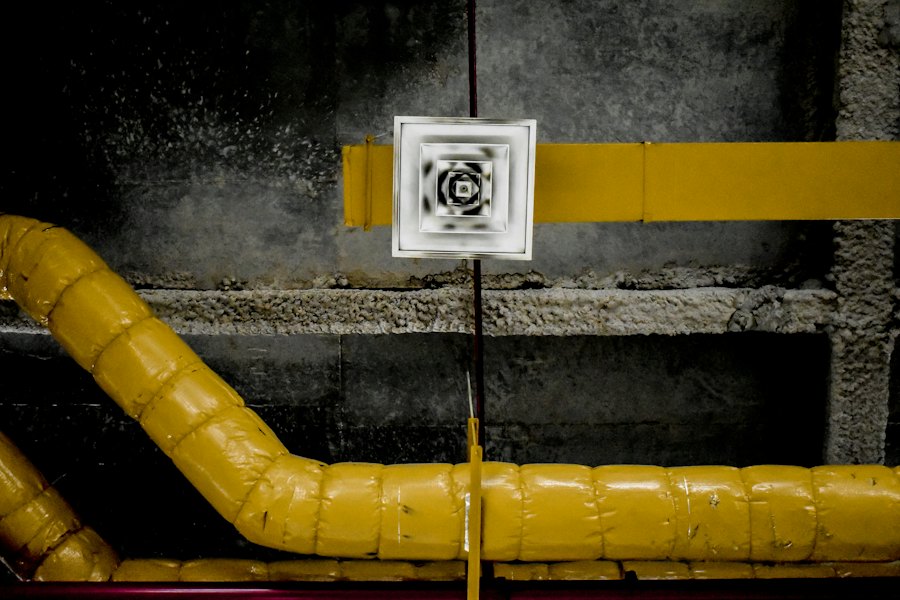
How ducted air conditioning works
A ducted system uses one indoor fan coil unit, usually hidden in the ceiling space or under the floor, connected to an outdoor unit. Insulated flexible ducts carry conditioned air from the fan coil to outlets in each room, and a return air grille draws air back to be filtered and treated again. The result is even temperature throughout the house with nothing mounted on the walls apart from a slim controller.
Most ducted systems installed in Australian homes are reverse-cycle, so they heat as well as cool. That makes them a strong option for families replacing an ageing gas ducted heater and a collection of wall-mounted units at the same time.
Is ducted right for your home?
- You want most of the house comfortable, not just one or two rooms.
- There is enough ceiling or sub-floor space to run the fan coil and ducts.
- You are building, renovating or replacing an old ducted heater.
- You prefer clean walls and a single control point for the whole home.
If you mostly use one living area and a bedroom, two split systems may cost less to buy and run. We will say so.
Zoning: the part that saves money
Zoning splits the house into areas, such as living, bedrooms and upstairs, with motorised dampers in the ductwork. You open only the zones you need. Conditioning the living zone in the afternoon and switching to bedrooms at night means the outdoor unit isn't cooling empty rooms. Newer controllers add room-by-room temperature sensing, scheduling and phone control, which help two-storey homes in particular, where heat rises and upstairs bedrooms tend to run warm.
Design comes first
Ducted systems succeed or fail on design. We calculate the heat load room by room, size the unit to suit, then plan duct sizes, outlet positions and return air placement so each room gets the airflow it needs. Undersized returns, long crushed duct runs and outlets in the wrong spot are the usual reasons a ducted system is noisy, uneven or expensive to run.
What the installation involves
- Detailed site inspection of ceiling access, structure, existing ductwork and electrical supply.
- Written design and quote showing unit capacity, zone layout and outlet locations.
- Installation of the fan coil, ductwork, outlets, return air grille, dampers and outdoor unit.
- Electrical connection by a licensed electrician, then pressure testing, evacuation and commissioning.
- Balancing airflow to each room, controller set-up and a walk-through of zones and filters.
Questions we hear about ducted systems
Can you reuse my existing ductwork?
Sometimes. Older ducts are often under-insulated, crushed or sized for heating only, which suits cooling poorly. We inspect them and only reuse sections that are in good condition and the right size.
How many zones do I need?
Most homes work well with somewhere between three and six zones, grouped by how rooms are used rather than simply by floor area. We design zones around your daily routine.
Is ducted noisy?
A well-designed system is very quiet indoors because the fan coil sits away from living spaces. Noise usually points to undersized ducts or return air, which is why we design these properly from the start.
Can ducted work in a two-storey home?
Yes. Options include a single system with separate upstairs and downstairs zones or two smaller systems. Upstairs rooms often need extra capacity because heat rises.